
Methylation: The Process That Could Influence How Well You Age
"The most important set of biochemical pathways in your body, perhaps the central switching station for the whole operation, are the "train tracks" responsible for keeping two specific trains (or biochemical processes) running smoothly. They are the "methylation" train and the "sulfation" train." Dr Mark Hyman, the founder and medical director of The UltraWellness Center and author of The UltraMind Solution
What if some of the most important influences on how well we age are happening deep inside our cells, long before we notice any changes in our health?
We often think of ageing in terms of what we can see or feel: greying hair, stiff joints, changing energy levels or the occasional struggle to remember a name.
But ageing is also a biological process, influenced by countless chemical reactions taking place inside our bodies every second.
One of these is called methylation.
It's a process you've probably never given much thought to, yet it plays a vital role in how your body functions, how your brain stays healthy and how your cells respond to the passing years.
And here's what makes it particularly interesting: although we can't stop the clock, our everyday choices can help provide the conditions our bodies need to function well as we age.
What exactly is methylation?
Methylation sounds complicated, but the basic idea is surprisingly simple.
Your body continually transfers tiny chemical groups, called methyl groups, from one molecule to another. These groups contain one carbon atom and three hydrogen atoms.
Think of methylation as a system of chemical switches and instructions that helps your body carry out essential tasks.
It contributes to:
Regulating gene activity: Helping determine which genetic instructions are used by your cells.
Supporting brain function: Playing a role in the production and metabolism of neurotransmitters - chemicals involved in mood, motivation and other brain functions.
Maintaining healthy cells: Contributing to the production and maintenance of important cellular components.
Processing homocysteine: Helping convert this amino acid into other useful substances through pathways that depend on nutrients including folate and vitamin B12.
One particularly fascinating form is DNA methylation.
Although the DNA you inherited remains largely unchanged throughout your life, the way your cells use its instructions can change. DNA methylation is one of the mechanisms that helps regulate this activity.
Imagine your DNA as an enormous instruction manual. DNA methylation helps determine which sections are more accessible for reading and which are less active.
This is part of a wider field called epigenetics: the study of how gene activity is regulated without changing the underlying DNA sequence.
And it offers some intriguing insights into ageing.
Why does methylation matter as we get older?
We all have a chronological age: the number of birthdays we've celebrated. But our biological age is a different concept. It describes how our cells and body systems are functioning relative to patterns typically seen at different ages.
Two people who are both 60 may have very different levels of fitness, metabolic health, cardiovascular function and resilience.
Researchers have discovered that patterns of DNA methylation change as we age. By examining particular sites on our DNA, scientists can estimate aspects of biological ageing using tools known as epigenetic clocks.
These clocks are helping researchers investigate why some people develop age-related health problems earlier than others.
However, there's an important distinction.
Healthy methylation isn't about having more methylation everywhere. It's about having the right patterns and processes operating in the right places.
Some genes become more methylated with age, while others become less methylated. What matters is how these changes affect the functioning of our cells.
We also know that methylation depends on nutrients supplied by our diet, particularly several B vitamins.
This creates an important connection between the food we eat, our metabolism and our long-term health.
What does methylation have to do with brain health?
One important role of methylation is in the production and metabolism of neurotransmitters — chemical messengers that allow nerve cells to communicate with one another. These include dopamine, which is involved in motivation and movement, and serotonin, which helps regulate mood.
Methylation also contributes to the maintenance of healthy cell membranes, including those surrounding brain cells, and helps regulate the activity of genes involved in cellular function.
Another important role is helping the body process homocysteine, an amino acid that, when elevated, is associated with poorer cardiovascular and cognitive health.
I've written previously about homocysteine and its connection with brain health, so I won't go into detail here. But it provides a useful example of why methylation matters: when certain methylation-related pathways aren't functioning efficiently, homocysteine can accumulate.
The UK charity Food for the Brain has highlighted the importance of B vitamins in supporting these pathways, particularly in relation to cognitive health as we get older.
The encouraging message is that our brains don't simply stop responding to the way we live once we reach midlife. Nutrition, physical activity, sleep and other everyday habits continue to influence the biological environment in which our brain cells operate.
And that brings us to something we can all do something about.
5 practical ways to support healthy methylation and ageing
Methylation is an essential process that takes place naturally throughout your body. You don't need to consciously control it, but you can help provide the nutrients and conditions that support healthy cellular function.
Some of the following strategies directly supply nutrients required for methylation. Others influence DNA methylation patterns or support the wider processes involved in healthy ageing.
1. Eat plenty of folate-rich vegetables and legumes
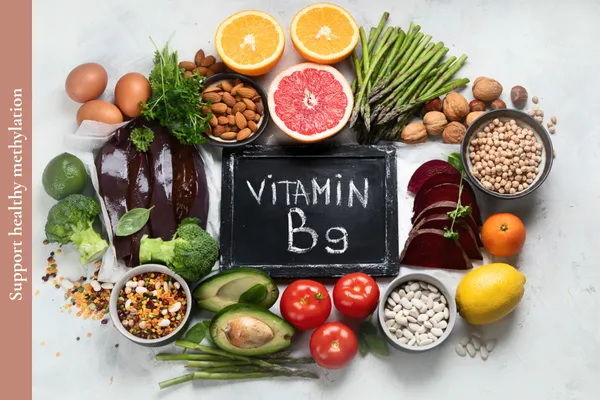
Folate, also known as vitamin B9, is one of the most important nutrients involved in methylation.
Your body uses folate in a series of chemical reactions known as the one-carbon metabolism pathway. This helps provide the building blocks needed to transfer methyl groups between molecules.
Folate is also essential for making and repairing DNA and producing healthy red blood cells.
Fortunately, many everyday foods are naturally rich in folate, including:
Dark leafy greens such as spinach, kale and spring greens
Broccoli, Brussels sprouts and asparagus
Lentils, chickpeas and beans
Avocados and citrus fruits
These foods offer additional benefits, including fibre, vitamins and plant compounds that support overall health.
Rather than focusing on individual nutrients in isolation, aim to eat a wide variety of vegetables and plant foods throughout the week.
Try this: Add a generous handful of spinach to scrambled eggs, include lentils in a soup or casserole, or make half your dinner plate vegetables. Small changes like these can make a meaningful difference to your nutrient intake over time.
2. Get enough B12, B6 and choline
Folate doesn't work alone. Several other nutrients help keep the methylation cycle functioning properly, including vitamins B12, B6 and B2, along with choline.
You can obtain these nutrients from a variety of foods:
B12: Fish, meat, eggs, dairy products and fortified foods
B6: Poultry, fish, potatoes, chickpeas and bananas
B2: Milk, yoghurt, eggs, almonds and mushrooms
Choline: Egg yolks, fish, meat, soybeans and some cruciferous vegetables
Vitamin B12 deserves particular attention in midlife and beyond.
As we age, changes in the digestive system can make it harder to absorb B12 from food. Certain medications, including metformin and long-term acid-suppressing drugs, can also affect B12 levels.
A deficiency may contribute to fatigue, pins and needles, balance difficulties and problems with memory or concentration.
If you're concerned about your B12 status, it's worth discussing this with your GP.
Try this: Look at the foods you eat regularly. Are you getting reliable sources of B vitamins and choline? Eggs, fish, legumes and a varied selection of vegetables are useful additions to many meals
3. Move your body regularly
We usually think about exercise in terms of stronger muscles, a healthier heart or maintaining a healthy weight. But physical activity also influences what happens inside our cells.
Researchers have discovered that exercise can change DNA methylation patterns, including those associated with how our muscles respond to physical activity.
In one study, researchers examined skeletal muscle before and after exercise and found changes in DNA methylation alongside changes in the activity of genes involved in the body's response to movement.
This is a fascinating example of how our cells can respond to what we do.
Regular physical activity also improves blood circulation, helps regulate blood sugar, supports cardiovascular health and contributes to better brain function.
And these benefits remain achievable well into later life.
You don't need to spend hours in a gym. Brisk walking, cycling, swimming, dancing, gardening and strength training all count.
UK physical activity guidelines recommend that adults aim for at least 150 minutes of moderate-intensity activity each week, together with muscle-strengthening activities on at least two days.
Try this: Build a brisk 20–30-minute walk into your daily routine, or find ways to add more movement to activities you already enjoy. Include some resistance exercises to help maintain muscle strength as you age.
4. Prioritise restorative sleep
Sleep is one of the most important foundations of healthy ageing. While you're asleep, your brain is consolidating memories, processing information and carrying out essential maintenance.
Sleep also helps regulate hormones, immune function, metabolism and the body's internal biological clock.
Scientists are investigating how sleep patterns relate to changes in DNA methylation and other aspects of epigenetic regulation.
For example, studies have found associations between disrupted sleep and differences in DNA methylation patterns, particularly in genes involved in circadian rhythms and metabolic processes.
Although this research is still developing, we already have substantial evidence that regularly getting enough good-quality sleep supports physical and cognitive health.
For most adults, around seven to nine hours of sleep each night is a useful target.
Consistency matters too. Going to bed and waking up at roughly the same time helps reinforce your body's circadian rhythm, which coordinates many of the processes that keep you functioning well.
Try this: Choose a realistic bedtime that allows you enough sleep, keep your waking time reasonably consistent and get outside in natural daylight during the morning. Reducing bright light and stimulating activities before bed can also help prepare your body for sleep.
5. Make time to recover from stress
Stress is a natural response to life's challenges. In short bursts, it can help us react quickly, concentrate and perform under pressure. But when stress becomes prolonged, it can affect many aspects of our health.
Ongoing stress influences the body's hormonal and inflammatory responses, and can interfere with sleep, blood sugar regulation, cardiovascular health and cognitive function.
Researchers have also found associations between chronic stress and changes in DNA methylation, including in genes involved in regulating the body's stress response.
This is an interesting area of epigenetic research because it suggests that our experiences and environment may influence how certain genes are regulated.
Of course, we can't remove every source of stress from our lives. In midlife, many of us are balancing demanding jobs, family responsibilities, ageing parents, financial pressures or changes in our own health.
But we can create more opportunities for our nervous systems to recover.
Spending time outdoors, practising slow breathing, enjoying a hobby, connecting with friends or taking regular breaks from work can all contribute to better stress management.
The important thing is finding activities that genuinely help you relax and making them a regular part of your routine.
Try this: Set aside ten minutes each day for something that helps you switch off. It might be a walk outdoors, listening to music, reading, gardening or simply sitting quietly without distractions.
Can lifestyle changes influence our biological age?
This is where the science of methylation becomes especially interesting.
In 2021, researchers published a small randomised clinical trial involving 43 healthy men aged between 50 and 72. Over eight weeks, participants followed a programme combining a nutrient-rich diet, regular exercise, sleep guidance and stress-management practices, together with specific supplements.
The researchers then measured DNA methylation patterns using an epigenetic clock — a tool that estimates biological age by examining particular chemical markers on DNA.
At the end of the study, the intervention group had an average epigenetic-age score 3.23 years lower than the control group. That's an intriguing finding, especially considering that the intervention lasted just eight weeks.
The study was small, involved only men and measured an ageing-related marker rather than actual lifespan or long-term disease outcomes. So it doesn't establish that participants had become biologically younger in every meaningful sense.
What it does suggest is that DNA methylation patterns may respond to a combination of dietary and lifestyle changes.
And that gives researchers an exciting avenue to explore.
It also reinforces something we already know from decades of health research: the way we eat, move, sleep and manage stress can have a significant influence on our long-term health.
Your daily choices matter more than you might think
One of the most fascinating things about the human body is that it's constantly adapting. Even as we get older, our cells continue to respond to the nutrients we provide, the physical activity we undertake and the conditions in which we live.
Methylation is just one part of this extraordinary system, but it offers a glimpse into how closely our everyday habits are connected with the processes taking place inside our bodies.
We can't control every aspect of ageing. Our environment and circumstances beyond our control all play a part.
But we have more influence over our long-term health than we sometimes realise.
And we don't need to understand every detail of our biochemistry to take advantage of that knowledge.
Eating more nutrient-rich foods, moving regularly, protecting our sleep and making time to recover from stress are all achievable ways to invest in our future health.
So here's my encouragement: choose one of these five areas and decide on one small improvement you can make this week.
Because the aim isn't simply to add more years to our lives.
It's to give ourselves the best possible opportunity to stay active, healthy and mentally sharp — and enjoy those years to the full.
References
1. Smith et al. (2010) — Homocysteine-Lowering by B Vitamins Slows the Rate of Accelerated Brain Atrophy in Mild Cognitive Impairment. PLOS ONE. Background evidence for the connection between B-vitamin-dependent pathways and brain health.
2. Barrès et al. (2012) — Acute Exercise Remodels Promoter Methylation in Human Skeletal Muscle. Cell Metabolism. Demonstrates changes in DNA methylation following exercise.
3. Fitzgerald et al. (2021) — Potential reversal of epigenetic age using a diet and lifestyle intervention: a pilot randomized clinical trial. Aging. Reports the eight-week intervention and epigenetic-age findings.
4. Food for the Brain — foodforthebrain.org. Additional educational resources on nutrition, methylation-related pathways and cognitive health.