Homocysteine: The Marker That Could Be Affecting Your Brain In Midlife
"The association between homocysteine, memory decline, dementia and Alzheimer's risk is beyond doubt... Higher blood levels of B12 and/or folate equate to better cognition and less risk for Alzheimer's." Patrick Holford, founder of Food For The Brain and author of Alzheimer's: Prevention is the Cure.
You know the word. It's on the tip of your tongue. But it just eludes you. For a moment, you pause. You try to pick the thread back up again, all the while wondering:
Is this just normal… or is something changing?
Most people assume these moments are simply part of getting older. And yes, some changes are common. But what's often missed is that there are underlying factors influencing how clearly you think, how well you focus, and how sharp you feel from day to day.
Some of those factors can be measured.
And one of the most overlooked is homocysteine.
What is homocysteine?
Homocysteine is a natural substance in your blood. It's produced when your body processes protein - specifically an amino acid called methionine, which is found in foods like meat, fish, and eggs.
On its own, homocysteine isn't harmful. In fact, your body is designed to recycle and break it down efficiently.
But like many things in the body, balance matters. If homocysteine isn't processed effectively, levels can begin to rise. And over time, that can start to affect how well your body - and your brain - functions.
Why it matters for your brain
Your brain depends on a steady, reliable supply of oxygen and nutrients, delivered through an intricate network of blood vessels.
When everything is working well, that system runs smoothly. Blood flows, energy is available, and your brain can do what it's designed to do - think clearly, stay focused, and recall what you need, when you need it.
But elevated homocysteine can interfere with that process.
Research has shown that high levels are associated with:
Inflammation
Damage to blood vessels
Reduced blood flow to the brain
Over time, this can mean:
Less efficient delivery of oxygen and nutrients
Increased stress on brain cells
A gradual impact on clarity, focus, and memory
Elevated homocysteine has also been linked to an increased risk of stroke, blood clots, and Alzheimer’s disease.
This is particularly relevant in midlife, when the systems that have quietly supported you for years - optimal nutrient absorption and healthy circulation - start to become a little less efficient. Not dramatically, but enough to notice.
What causes homocysteine to rise?
In most cases, elevated homocysteine is not random. The most common drivers include:
Low levels of key B vitamins
Your body relies on:
Folate (B9)
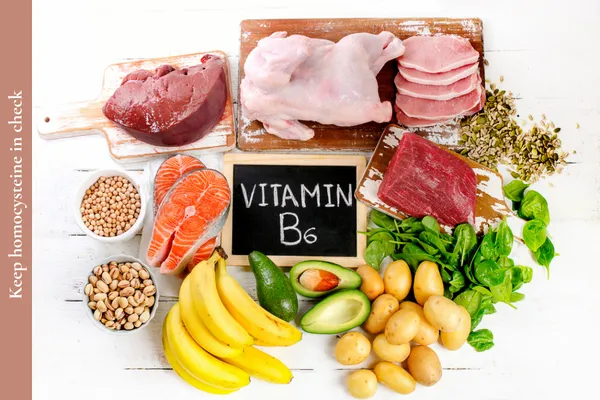
Vitamin B6
Vitamin B12
These nutrients help convert homocysteine into other useful substances.
If they're in short supply, that process slows - and homocysteine can build up.
Changes in absorption
As we get older, the body can become less efficient at absorbing certain nutrients, particularly vitamin B12.
This means you can be eating well, but still not getting what you need at a cellular level.
Chronic stress and inflammation
Ongoing stress places extra demand on the body and can interfere with multiple systems, including those involved in processing homocysteine.
Medication use
Some commonly prescribed medications can reduce levels of B vitamins over time, which in turn affects homocysteine.
Diet quality
A diet low in nutrient-dense whole foods - and higher in ultra-processed options - can leave gaps in the nutrients your body depends on.
What is a healthy level?
One of the most empowering aspects of this is that homocysteine is easy to assess.
It's measured with a simple blood test, which you can request through your GP or via private testing.
This matters, because it moves you out of guesswork.
Instead of wondering whether something is "just ageing," you have data. You have something concrete to work with.
Ranges can vary slightly, but many experts suggest aiming for:
Below approximately 10 µmol/L
If your levels are higher, it's worth exploring why - and what you can do to bring them back into balance.
5 Ways to bring homocysteine down
Lowering homocysteine isn't about targeting it directly. It's about supporting the systems that regulate it.
And the encouraging part is that this can often be done with relatively simple, consistent steps.
1. Support the pathway that clears it
Your body already has a built-in system for processing homocysteine - it just needs the right inputs.
Focus on foods rich in:
Folate: leafy greens, beans, lentils
Vitamin B6: chicken, fish, potatoes, bananas
Vitamin B12: eggs, dairy, fish, meat
If you follow a plant-based diet, B12 is particularly important to monitor.
2. Prioritise nutrient-dense, whole foods
This doesn't need to be complicated. Making dietary shifts towards:
More vegetables
Quality protein
Healthy fats
…can significantly improve the nutrients available to your body.
Small changes here can have a meaningful impact over time.
3. Support your gut health
The old adage "You are what you eat" is true - but only to a certain degree.
A more accurate way to think about it is:
"You are what you absorb."
You can be eating all the right foods, but if your body isn't digesting and absorbing nutrients effectively, you won't get the full benefit.
This is particularly relevant when it comes to nutrients like B12 and folate, which are essential for processing homocysteine.
To support this, care for your gut microbiome by:
Including fibre-rich foods such as vegetables, legumes, and whole grains
Adding fermented foods like yoghurt, kefir, or sauerkraut
A well-functioning gut helps ensure that the nutrients you're eating are actually being used - supporting the systems that keep homocysteine in balance.
4. Review medications where relevant
If you're taking medication long-term, it's worth asking your pharmacist or GP whether it could affect nutrient levels.
This isn't about making changes independently - but about being informed and proactive.
5. Consider targeted support if needed
In some cases, diet alone may not fully address the issue - particularly for B12 or folate.
This is where personalised advice from a qualified healthcare practioner and, if appropriate, supplementation can be helpful.
Final thought
It's easy to assume that changes in memory or focus are simply part of getting older. But often, they reflect something more specific - and more actionable.
Homocysteine is one of those markers.
And while it's rarely mentioned, it offers a valuable insight into what's happening beneath the surface.
Because staying sharp and mentally clear in midlife isn't about luck or chance. It's about understanding your body, knowing what to look for, and taking small, consistent steps that support how it functions.
And sometimes, that starts with something as simple as a single blood test - and what you choose to do next.
An Important Insight on Homocysteine and Brain Health
There’s an important piece of research that’s worth highlighting here.
In a study led by the University of Oxford (known as the VITACOG trial), people with mild cognitive impairment were given B vitamins (B6, folate and B12) or a placebo. The results showed that those taking B vitamins had a slower rate of brain shrinkage and cognitive decline - with the greatest benefit seen in those who had higher levels of homocysteine to begin with.
However, follow-up research revealed something equally important.
The cognitive benefits of these homocysteine-lowering B vitamins were only seen in participants who also had good levels of omega-3 fats. In other words, both nutrients appeared to work together to support brain health. To find out more, see my article Upgrade Your Brain: 3 Essential Supplements for Long-Term Brain Health.