6 Brain-Smart Spices To Support Healthy Ageing In Midlife
"It's easy to forget that herbs and spices are not just flavor enhancers for food, but promoters of good health too." Dr Daniel Amen, author of Memory Rescue
When we think about eating for brain health, foods like oily fish and blueberries often spring to mind. Yet one of the most powerful ways to nourish your brain could already be sitting in your kitchen cupboard.
Plants can't run away when they're attacked by insects, bacteria, fungi or harsh sunlight. Instead, they manufacture thousands of natural compounds to protect themselves. These compounds act as the plant's own defence system, helping it survive in a challenging environment.
Remarkably, many of these same compounds can benefit us too.
The herbs and spices we add to our meals are packed with antioxidants and other plant chemicals that help protect our cells from oxidative stress and chronic inflammation – two processes that are thought to contribute to many age-related diseases, including cognitive decline.
No single spice can prevent dementia or guarantee a sharp memory throughout life. However, regularly including a variety of herbs and spices as part of a balanced diet is one more simple way to support your brain as you age.
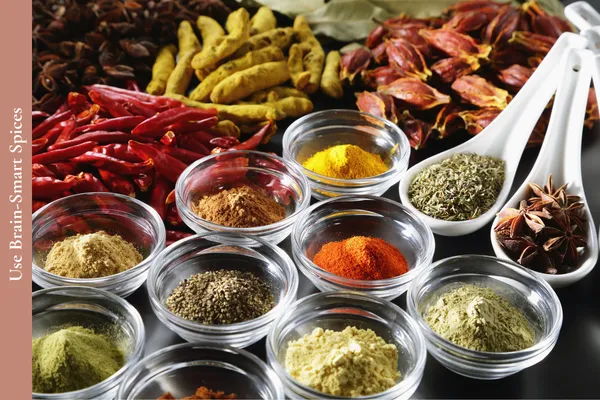
Here are six brain-smart spices worth making room for in your everyday cooking.
1. Turmeric
Turmeric has been used in traditional medicine for thousands of years, and modern science is starting to reveal its secrets.
Its vibrant yellow colour comes from curcumin, a natural compound with powerful antioxidant and anti-inflammatory properties. Chronic inflammation is increasingly recognised as one of the factors that can contribute to cognitive decline, making turmeric one of the most widely researched spices for healthy ageing.
Studies suggest curcumin may also help reduce the build-up of beta-amyloid proteins associated with Alzheimer's disease, can help to regulate blood sugar and appears to support healthy blood vessels, helping maintain good circulation to the brain.
Easy ways to use turmeric
Stir into soups and casseroles.
Add to curries and dhal.
Sprinkle over cauliflower before roasting.
Mix into scrambled eggs or omelettes.
Make a warming mug of golden milk.
Top tip: Curcumin is absorbed much better when eaten with black pepper and a little healthy fat, such as extra virgin olive oil.
2. Ginger
Many people reach for ginger to settle an upset stomach, but its benefits extend far beyond digestion.
Fresh and dried ginger contain compounds called gingerols and shogaols, which help reduce inflammation and protect cells from oxidative damage. Research also suggests ginger may support memory, attention and processing speed while promoting healthy circulation throughout the body.
Another advantage is its versatility. Fresh ginger adds a bright, warming flavour to both savoury and sweet dishes without needing lots of salt or sugar.
Easy ways to use ginger
Add finely sliced fresh ginger into stir-fries.
Blend into smoothies.
Add to homemade soups.
Make fresh ginger and lemon tea.
Grate into sparkling water with slices of lime.
3. Saffron
Saffron is often called the world's most expensive spice, but a little goes a surprisingly long way.
While it has traditionally been prized for its beautiful golden colour and distinctive flavour, scientists have become increasingly interested in its effects on mood.
Several clinical studies suggest saffron may help improve symptoms of mild to moderate low mood and anxiety in some people. Maintaining emotional wellbeing matters because persistent stress, anxiety and depression can all affect memory, concentration and overall brain health. Supporting mood is therefore an important part of supporting healthy ageing.
Saffron has also been shown to be potent antioxidant, a neuroprotectant, and a memory enhancer, even if people with mild cognitive impairment*.
Easy ways to use saffron
Add a few strands to rice dishes.
Stir into risotto.
Use in fish or seafood recipes.
Infuse into soups.
Steep a few strands in hot water before adding to Mediterranean-inspired dishes.
4. Cinnamon
Cinnamon isn't just for Christmas.
This familiar spice contains compounds that may help support healthy blood sugar levels by improving insulin sensitivity. That's good news for brain health because keeping blood sugar within a healthy range helps protect blood vessels and may reduce the long-term risk of cognitive decline.
Cinnamon has been shown to lower cholesterol and improve working memory in older adults and in prediabetic people, while improving blood flow to the prefrontal cortex. Researchers are also investigating cinnamon's ability to reduce inflammation and interfere with the abnormal protein changes associated with Alzheimer's disease.
Some research has even suggested cinnamon may help support attention and concentration, making it another valuable addition to a brain-friendly diet.
Easy ways to use cinnamon
Sprinkle over porridge.
Stir into Greek yoghurt.
Add to overnight oats.
Dust over baked apples or pears.
Blend into homemade chia pudding.
5. Cloves
Although they are small, cloves are among the richest natural sources of antioxidants found in any spice.
Antioxidants help neutralise unstable molecules known as free radicals before they can damage cells. Over many years, oxidative stress is thought to contribute to ageing throughout the body, including the brain.
Cloves also possess anti-inflammatory properties, making them another valuable ingredient for supporting healthy ageing. You don't need very much, as their flavour is wonderfully intense.
Easy ways to use cloves
Add to homemade stewed fruit.
Include in slow-cooked casseroles.
Use in homemade granola.
Add to herbal tea blends.
Mix into spice rubs for roasted vegetables.
6. Cardamom
Cardamom is often overlooked, yet it deserves a regular place in the kitchen.
Its aromatic oils have antioxidant and anti-inflammatory properties, while studies suggest it may also help support healthy blood pressure and circulation. Good blood flow is essential because every brain cell relies on a constant supply of oxygen and nutrients.
Researchers are also investigating whether compounds within cardamom may help reduce the build-up of beta-amyloid proteins involved in Alzheimer's disease, although this remains an emerging area of research.
Easy ways to use cardamom
Include in curries and slow-cooked dishes.
Add the ground spice to porridge.
Sprinkle into homemade muesli.
Stir into coffee.
Add to smoothies.
Small Habits, Long-Term Benefits
As you've probably noticed, these six spices have something in common.
Many help reduce inflammation.
Many are rich in antioxidants.
Several support healthy blood flow.
Others may help maintain healthy blood sugar or emotional wellbeing.
Rather than working in exactly the same way, they each contribute something slightly different. And together, they become part of a dietary pattern that supports healthy ageing.
The encouraging news is that simply using herbs and spices more often is an easy habit that adds flavour while increasing the variety of beneficial plant compounds in your diet.
Healthy ageing is rarely about finding one "superfood". It's about making consistent choices that, over months and years, help your body and brain function at their best.
None of these choices will transform your health overnight.
But when combined with regular exercise, restorative sleep, good stress management and a colourful whole-food diet, they become another simple way to protect the remarkable organ that makes you who you are.
Perhaps it's time to give your spice rack the attention it deserves.
*M. Tsolaki et al., "Efficacy and Safety of Crocus Sativus L. in Patients with Mild Cognitive Impairment: One Year Single-Blind Randomized, with Parallel Groups, Clinical Trial," Journal of Alzheimer's Disease 54, no. 1 (July 27, 2016): 129-33