
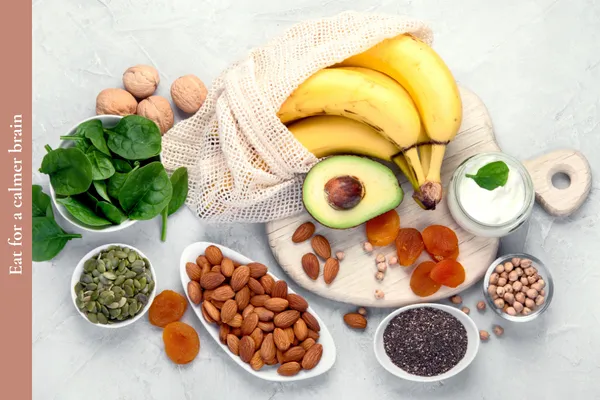
10 Foods And Drinks That Can Fuel Or Calm Anxiety in Midlife
"A crucial part of battling anxiety is making sure your diet is full of foods that are calming and free of foods that put you on edge." Dr Uma Naidoo, Nutritional sychiatrist at Harvard Medical School and author of The Food Mood Connection
Have you noticed that you feel more anxious than you used to?
Perhaps situations you would once have taken in your stride now leave you worrying for hours. You might feel more easily overwhelmed, find it harder to switch off at night, or occasionally experience that uncomfortable feeling of being on edge for no obvious reason.
Anxiety can become more noticeable during midlife for many reasons.
Hormonal changes can affect mood and our response to stress. Sleep may become less reliable. And then there is life itself. Our 50s and 60s can bring career changes, retirement decisions, financial pressures, health concerns, children leaving home, grandchildren and caring for ageing parents – sometimes several at once.
But there's another influence on anxiety that is easily overlooked:
What we eat and drink.
Food isn't a treatment for an anxiety disorder, and there are times when anxiety needs professional support. However, our diet can influence blood sugar, inflammation, the gut microbiome and the nutrients available to our brain – all of which can play a part in how we feel.
So could some of your everyday choices be turning up the volume on anxiety? And could others help your brain become better equipped to stay calm and resilient?
Let's take a look.
5 foods and drinks that could be fuelling anxiety
1. Ultra-processed and sugary foods
There are plenty of reasons to reduce our reliance on ultra-processed foods as we get older, and our mental wellbeing may be one of them.
Research has found associations between diets high in ultra-processed foods and poorer mental health, although observational research cannot prove that these foods directly cause anxiety.
One possible piece of the puzzle is blood sugar.
Eat something containing a lot of sugar or refined carbohydrate and glucose can enter your bloodstream rapidly. Your pancreas responds by releasing insulin to move that glucose into your cells.
Sometimes blood glucose then falls rapidly afterwards.
If you've ever felt shaky, irritable, light-headed, hungry or strangely panicky a couple of hours after eating something sugary, you'll know how unpleasant this can feel.
Your instinct may be to reach for a biscuit, chocolate bar or another quick source of energy – sending your blood sugar upwards again and keeping the rollercoaster going.
Keeping blood sugar more stable by choosing minimally processed foods containing fibre, protein and healthy fats can help provide a steadier supply of energy.
Try this: Notice what happens a couple of hours after breakfast or lunch. If you regularly experience an energy crash, hunger or jitteriness, experiment with changing the composition of that meal.
2. Caffeine
I enjoy a cup of coffee, and coffee itself contains beneficial plant compounds. But caffeine is a stimulant – and more isn't necessarily better.
Caffeine stimulates the central nervous system, which is why a morning coffee can make us feel more alert. But that stimulation can also produce sensations remarkably similar to anxiety: a faster heartbeat, restlessness, jitteriness and difficulty switching off.
Research supports a dose-dependent relationship between caffeine and anxiety, with higher intakes having a greater effect. People with panic disorder appear to be particularly sensitive.
Caffeine can also interfere with sleep, potentially creating another problem. A tired brain is generally less well equipped to cope with the stresses of the following day.
Remember that caffeine isn't only found in coffee. Tea, energy drinks, cola and chocolate can contribute too.
Try this: If you're feeling anxious, experiment with reducing your caffeine intake for a couple of weeks. You could make your coffee weaker, swap some cups for decaffeinated coffee or herbal tea, and avoid caffeine later in the day.
Pay attention to how you feel rather than simply assuming caffeine doesn't affect you.
3. Alcohol
A glass of wine or beer can feel like an easy way to unwind at the end of a stressful day.
Alcohol initially depresses activity in the central nervous system, which can make us feel more relaxed. The problem can come later.
As the effects wear off, changes in brain signalling can contribute to rebound symptoms, while alcohol can also disrupt the quality of our sleep. Both can leave us feeling less resilient and potentially more anxious the following day.
That can create an unfortunate cycle: feeling anxious → drinking to relax → sleeping less well → feeling more anxious or stressed → wanting another drink to relax.
Try this: Rather than concentrating only on how alcohol makes you feel while you're drinking it, notice how you sleep and how you feel the following morning.
You may discover that the drink you thought was helping you relax isn't helping as much as you thought.
4. Artificial sweeteners
Replacing sugar with artificial sweeteners can seem like an obvious solution, but I don't think we should automatically assume that something labelled “sugar-free” is the healthiest option.
Research into artificial sweeteners, the gut microbiome, metabolic health and mental health is still developing, but they have been shown to increase "bad" gut bacteria and can therefore negatively affect mood and anxiety.
If your diet contains lots of diet drinks, artificially sweetened yoghurts, desserts or other processed foods, it's worth becoming curious about them.
Rather than simply swapping sugar for ever-sweeter alternatives, we can gradually allow our taste buds to become accustomed to foods that aren't as sweet.
Try this: Look at the ingredients in some of the foods and drinks you consume regularly. Could sparkling water, herbal tea, plain yoghurt with berries or other minimally processed alternatives gradually replace some artificially sweetened products?
5. Gluten - for some people
Gluten has become controversial, and I certainly don't think everyone experiencing anxiety needs to give up bread.
However, there is an important connection worth knowing about.
Coeliac disease is an autoimmune condition in which eating gluten causes inflammation and damage to the small intestine. Although digestive symptoms are common, coeliac disease can present in different ways, and NICE recognises that people with coeliac disease may also experience anxiety and depression.
If you have persistent anxiety alongside symptoms such as digestive problems, unexplained tiredness, iron, B12 or folate deficiency, weight loss, or a family history of coeliac disease, it is worth discussing testing with your doctor.
Importantly, don't remove gluten before being tested for coeliac disease. The tests rely on your body being exposed to gluten, so eliminating it beforehand can make an accurate diagnosis more difficult.
If coeliac disease has been ruled out but you still wonder whether wheat or gluten affects how you feel, you could discuss a temporary elimination and structured reintroduction with an appropriately qualified healthcare professional or dietitian.
The important thing is to test your assumption rather than unnecessarily removing a whole category of nutritious foods from your diet.
Now let's look at what you could eat more of
The encouraging part of this story is that eating for a calmer brain isn't about creating a long list of foods you can no longer enjoy.
There are plenty of delicious foods we can add to our diet that provide the nutrients our brain and nervous system need.
1. Feed your gut with fibre
One of the most fascinating areas of research into mental health is happening several feet away from the brain – in the gut.
Our digestive system is home to trillions of microorganisms collectively known as the gut microbiome. The gut and brain communicate with one another through several pathways, giving rise to the term gut-brain axis.
One way to support a diverse population of beneficial gut microbes is to give them something to eat.
That's where fibre comes in.
Good sources include:
vegetables
beans and lentils
chickpeas
berries and other whole fruits
nuts and seeds
whole grains
Some plant foods including onions, garlic, leeks, asparagus and artichokes contain prebiotic fibres that are particularly useful fuel for beneficial gut bacteria.
And fibre has another advantage: it slows digestion and helps us avoid some of those rapid blood-sugar swings I mentioned earlier.
Rather than worrying about counting every gram, a simple place to begin is to ask:
Could I add another plant food to this meal?
2. Oily fish: omega-3 and vitamin D
Oily fish is one of my favourite foods for brain health because it provides the long-chain omega-3 fatty acids EPA and DHA.
These fats are important components of brain-cell membranes and are involved in several aspects of brain function.
In 2018, researchers conducted a meta-analysis of nineteen clinical trials, including 2,240 participants from eleven countries, which showed that omega-3 fatty acids were associated with a reduction in anxiety symptoms.*
Oily fish can also provide vitamin D, another nutrient important for overall health.
Good choices include:
salmon
sardines
mackerel
herring
trout
Try adding oily fish to your meals regularly – perhaps salmon with roasted vegetables, sardines on wholegrain toast or mackerel with a colourful salad.
3. Include fermented and cultured foods
If fibre feeds your existing gut bacteria, fermented foods offer another way of supporting your gut ecosystem.
Examples include:
live natural yoghurt
kefir
sauerkraut
kimchi
traditionally fermented vegetables
You don't need huge quantities.
A spoonful of sauerkraut alongside a meal, some live yoghurt with breakfast or a glass of kefir can be an easy place to start.
And if these foods are completely new to you, introduce them gradually and see how your digestive system responds.
4. Remember magnesium
Magnesium is involved in hundreds of processes within the body, including normal nervous-system function.
It has consequently attracted considerable interest as a possible nutrient for anxiety and sleep.
Some studies of magnesium supplementation have reported improvements in anxiety, particularly in people who may have low magnesium status.
But you don't need to start with a supplement. There are plenty of delicious magnesium-rich foods, including:
pumpkin and sesame seeds
almonds
cashews
spinach
Swiss chard
black beans
quinoa
A handful of nuts, pumpkin seeds sprinkled over yoghurt or porridge, spinach added to an omelette or beans added to a salad can all help increase the nutrient density of your diet.
5. Give tryptophan a helping hand
This final one involves some particularly interesting brain chemistry.
Tryptophan is an essential amino acid that our body uses in the pathway for making serotonin, a neurotransmitter involved in mood, sleep and other functions.
Foods containing tryptophan include chickpeas, eggs, turkey, seafood, nuts and seeds.
But simply eating lots of tryptophan doesn't mean it automatically pours into your brain.
Tryptophan has to cross the blood-brain barrier using a transport system that is also used by several other large amino acids. You could imagine several people trying to get through the same doorway at once.
This is where carbohydrate becomes interesting.
Eating carbohydrate stimulates the release of insulin. Insulin promotes the uptake of several of tryptophan's competing amino acids into tissues such as muscle, altering the ratio of tryptophan to its competitors in the bloodstream. Under the right circumstances, that can favour tryptophan's transport into the brain, where it is available for serotonin synthesis.
This relationship between carbohydrate, insulin, competing amino acids and brain tryptophan has been demonstrated experimentally, although the effect depends on the composition of the whole meal – particularly how much protein is eaten alongside the carbohydrate.
So this isn't a reason to reach for cakes, biscuits or white bread. Instead, combine a tryptophan-containing food with a sensible portion of a fibre-rich “smart” carbohydrate.
For example:
Chickpeas + quinoa
Eggs + wholegrain toast
Turkey + sweet potato
Hummus + wholegrain oatcakes
Salmon + brown rice
It's another reminder that individual nutrients don't work in isolation. The combination of foods on our plate matters too.
Food is one part of the anxiety puzzle
Of course, anxiety is complex.
Food can't remove a difficult situation, resolve financial worries, care for an ageing parent or make uncertainty about the future disappear.
And if anxiety is persistent, getting worse or interfering with your sleep, relationships, work or ability to enjoy everyday life, please speak to your GP or another qualified healthcare professional. Dietary changes should complement appropriate care rather than replace it.
But there is something hopeful about recognising that the choices we make each day can influence the environment in which our brain has to operate.
We can keep our blood sugar steadier.
We can provide the building blocks needed for neurotransmitters.
We can nourish our gut microbiome.
We can provide healthy fats and essential minerals.
And we can notice whether some of the things we routinely consume are making it harder for our brain to feel calm.
You don't need to change everything at once.
Choose one thing to have a little less of and one nourishing food to have a little more of.
Then get curious about what happens.
Because the food on your plate isn't simply fuelling your body. It's helping to create the environment in which your brain thinks, responds and feels – every single day.
*Su K-P, Tseng P-T, Lin P-Y, et al. Association of use of omega-3 polyunsaturated fatty acids with change in severity of anxiety symptoms. JAMA Network Open 2018;1(5):e182327. doi:10.1001/jamanetworkopen.2018.2327.